Keyword Clustering
Organise a keyword list into possible page topics, using shared search results to suggest which phrases belong together.
The tool opens in your Kwordia account. Dotted links explain terms in the glossary.
Before you begin
A long keyword list can leave you wondering whether you need one article or several. Keyword Clustering helps with that decision. It groups phrases that return some of the same search-result pages, which can suggest that people are looking for similar information.
Open Keywords and choose Keyword Clustering. It helps to bring a list you have already reviewed for relevance. Remove phrases about unrelated subjects before you begin.
Using this page, step by step
- Paste your keyword list or use Upload CSV. After an upload, read the imported phrases to make sure the file has been interpreted correctly. Select the country and language you are researching.
- For a first run, choose Balanced (45%). The percentage refers to the overlap between search-result URLs: how many of the same pages appear for the phrases being compared.
- Choose Strict (70%) if you want stronger evidence that phrases belong together, or Exploratory (15%) if you want to consider looser connections. You can start with Balanced without needing to decide this in advance.
- Read the estimate and run the analysis. Review the words inside each group, then decide whether one page could answer those searches well. The proposed groups still need your judgement.
A worked example
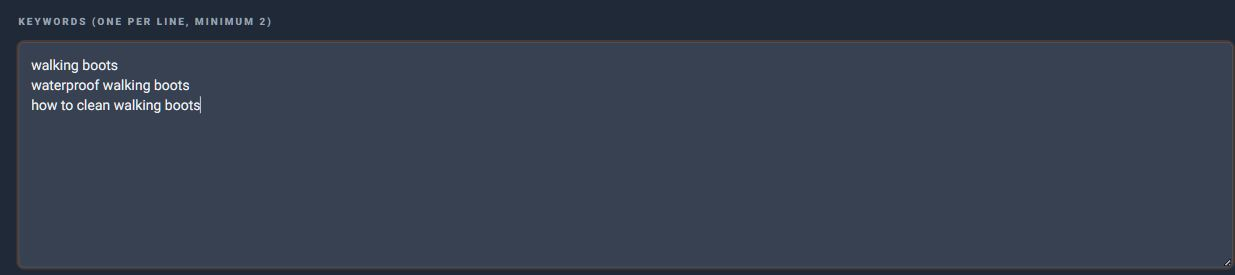
“How to clean walking boots” and “washing muddy walking boots” might belong in one care guide. A phrase about buying waterproof boots probably needs a different page. If the tool groups them together, open their results in SERP Analysis and compare the kinds of pages shown before deciding what to publish.
Understanding what you see
A cluster is a suggestion for a topic, not an instruction to put every phrase into the same article. Your product range, audience, and the question behind each phrase still matter.
Phrases can remain separate when they share few results or have limited data. That does not make them bad ideas; they may simply need their own page or more investigation.
Common questions and problems
If the groups do not seem sensible, check the country and language first. Search results can differ between markets.
Changing the threshold and running the analysis again requests new work and may use more credit. Review a few existing groups before deciding that you need another run.